
Fredericia St to Gdansk: Trains, Buses, Fares, Today's Connections, Routes, Duration, Types of Trains, Station Guides, Tips, Journey
Denmark Train Tickets
Scan QR code, download App to see Fredericia St's more live update, station guide, plan and photos



Train schedule Fredericia St to Gdansk(Gdańsk)
Popular train routes departing from Fredericia St
* Berlin Central Station(Berlin Hbf)
* Prague Central(Praha Hlavní Nádraží (Prag Hl. N.))
* Muenchen Hbf(München Hbf)
* Duesseldorf Hbf(Düsseldorf Hbf)
* Paris North(Paris Gare Du Nord)
* Vienna Central Station(Wien Hbf)
* Hamburg Central(Hamburg Hbf)
Popular train routes arriving in Fredericia St
* Aéroport De Copenhague St(Koebenhavns Lufthavn St)
* La Gare Principale D'osnabrück(Osnabrück Hbf)
* Flensbourg(Flensburg)
* Münster (Westf) Hbf(Münster(Westf)Hbf)
* Francfort(Frankfurt(Main)Hbf)
* Berlin
* Ribe St
* Cuxhaven
* Hambourg(Hamburg Flughafen)
* Vejle St
* Gare Centrale De Lubeck(Lübeck Hbf)
* Brême(Bremen Hbf)
* Hambourg(Hamburg Hbf)
* Gare Centrale De Copenhague Hovedbanegard(Köbenhavn H)
* Bruxelles Midi/Zuid
* Gare Centrale De Berlin(Berlin Hbf)
* Copenhagen(Koebenhavn)
* Gare Longue Distance De L'aéroport De Francfort Fernbf(Frankfurt(M) Flughafen Fernbf)
* Gare Centrale D'innsbruck(Innsbruck Hbf)
Popular train routes departing from Gdansk(Gdańsk)
* Utrecht Centraal
* Amsterdam Centraal
* Gdynia Glowna
* Innsbruck Central(Innsbruck Hbf)
* Poznan Gl.
* Szczecin
* Mayrhofen Im Zillertal
Popular train routes arriving in Gdansk(Gdańsk)
* Fredericia St
* Dortmund Hbf
* Paderborn Hbf
* Posen(Poznań)
* Warschauer Hauptbahnhof(Warszawa Centralna)
* Paris Nord Station(Paris Gare Du Nord)
* Odense St
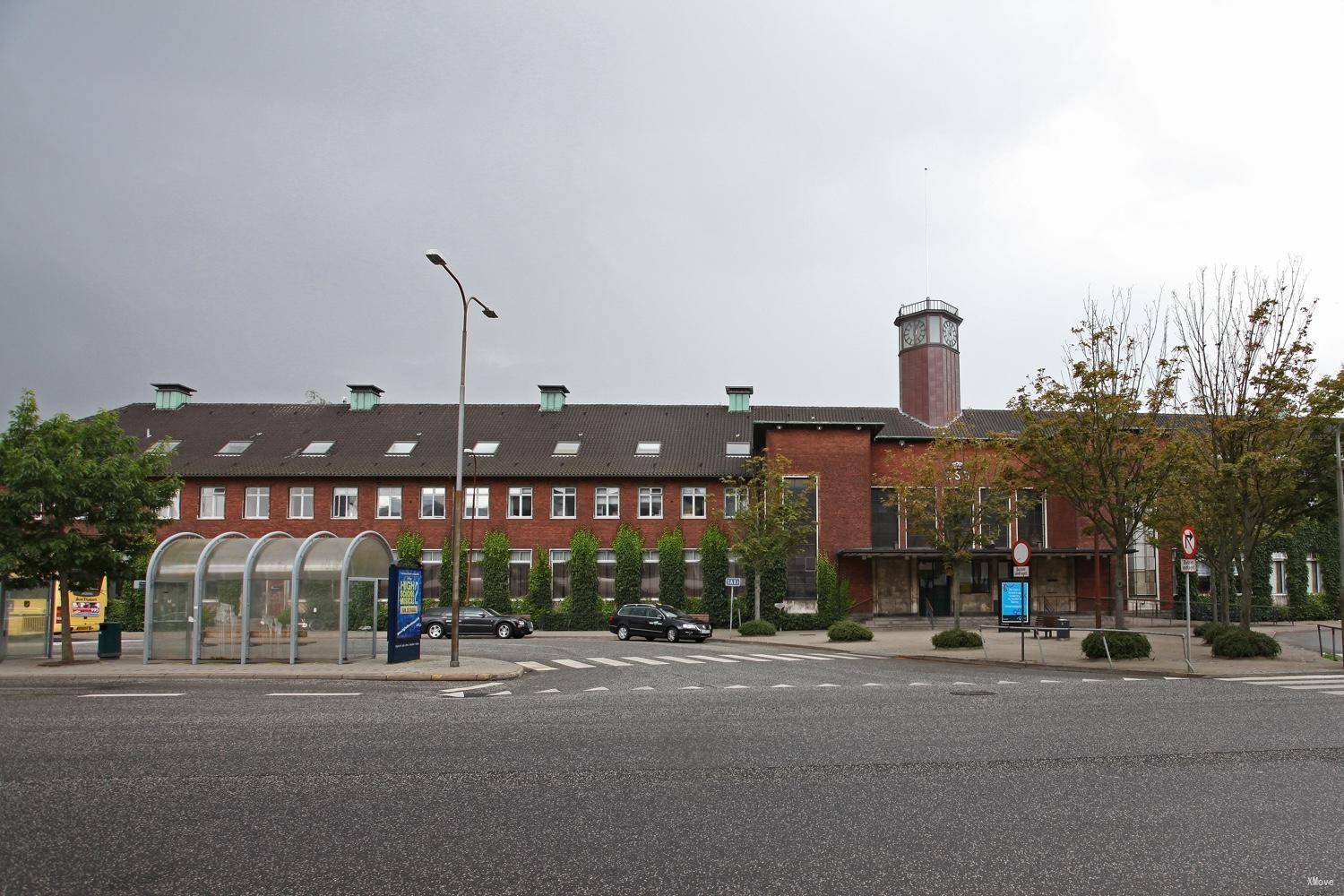
Fredericia (Danish pronunciation: [fʁɛðəˈʁɛ(t)ɕæ]) is a town located in Fredericia municipality in the southeastern part of the Jutland peninsula in Denmark. The city is part of the Triangle Region, which includes the neighbouring cities of Kolding and Vejle. It was founded in 1650 by Frederick III, after whom it was named. The city itself has a population of 41,108 (1st January 2019) and the Fredericia municipality has a population of 50,324 (2014).
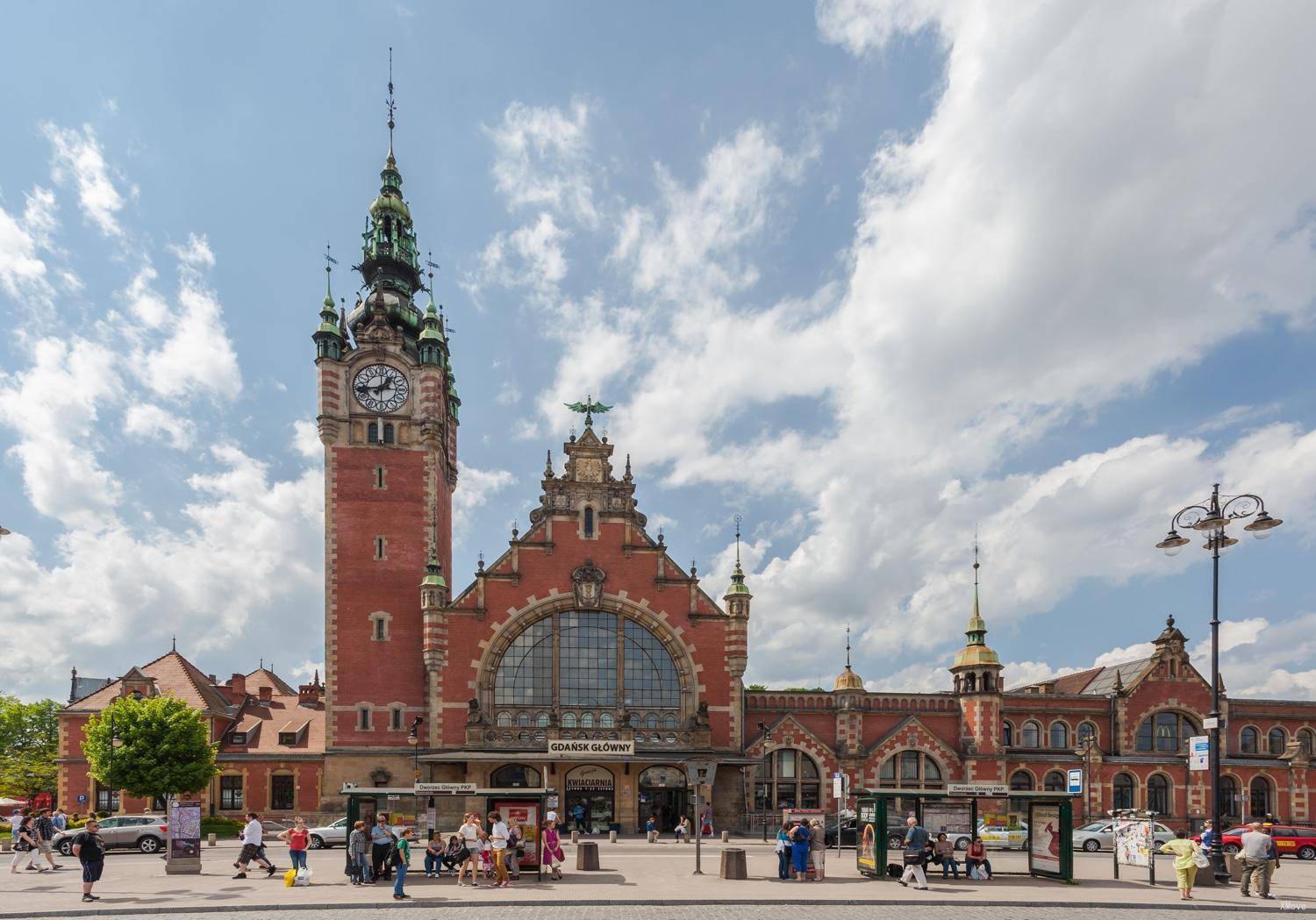
Fredericia - Guide, Attractions, Tours, Sightseeings | Train from/to Fredericia | Popular RoutesGdańsk (, also US: , Polish: [ɡdaj̃sk] ; Kashubian: Gduńsk; German: Danzig [ˈdantsɪç] ) is a city on the Baltic coast of northern Poland. With a population of 466,631, Gdańsk is the capital and largest city of the Pomeranian Voivodeship and one of the most prominent cities within the cultural and geographical region of Kashubia. It is Poland's principal seaport and the centre of the country's fourth-largest metropolitan area.The city is situated on the southern edge of Gdańsk Bay on the Baltic Sea, in a conurbation with the city of Gdynia, spa town of Sopot, and suburban communities; these form a metropolitan area called the Tricity (Trójmiasto), with a population approaching 1.4 million. Gdańsk lies at the mouth of the Motława River, connected to the Leniwka, a branch in the delta of the nearby Vistula River, which drains 60 percent of Poland and connects Gdańsk with the Polish capital, Warsaw. Together with the nearby port of Gdynia, Gdańsk is also a notable industrial center. The city's history is complex, with periods of Polish, Prussian and German rule, and periods of autonomy or self-rule as a free city state. In the early-modern age Gdańsk was a royal city of Poland. It was considered the wealthiest and the largest city of Poland, prior to the 18th century rapid growth of Warsaw. In the late Middle Ages it was an important seaport and shipbuilding town and, in the 14th and 15th centuries, a member of the Hanseatic League. In the interwar period, owing to its multi-ethnic make-up and history, Gdańsk lay in a disputed region between Poland and Germany, which became known as the Polish Corridor. The city's ambiguous political status was exploited, furthering tension between the two countries, which would ultimately culminate in the Invasion of Poland and the first clash of the Second World War just outside the city limits, followed by the flight and expulsion of the majority of the previous population in 1945. In the 1980s it would become the birthplace of the Solidarity movement, which played a major role in bringing an end to Communist rule in Poland and helped precipitate the collapse of the Eastern Bloc, the fall of the Berlin Wall and the dissolution of the Soviet Union. Gdańsk is home to the University of Gdańsk, Gdańsk University of Technology, the National Museum, the Gdańsk Shakespeare Theatre, the Museum of the Second World War, Polish Baltic Philharmonic and the European Solidarity Centre. The city also hosts St. Dominic's Fair, which dates back to 1260, and is regarded as one of the biggest trade and cultural events in Europe. Gdańsk has also topped rankings for the quality of life, safety and living standards worldwide.
Gdansk - Guide, Attractions, Tours, Sightseeings | Train from/to Gdansk | Popular Routes
Denmark Train Tickets
Scan QR code, download App to see Fredericia St's more live update, station guide, plan and photos
Hot Journeys
* Bratislava(Bratislava) -> Warsaw(Warszawa)
* Lucerne(Luzern) -> Interlaken
* Pisa -> Florence
* Prato(Prato) -> Florence
* Lisbon(Lisboa) -> Porto(Porto)
* Rome(Roma) -> Venice(Venezia)
* Turin(Torino) -> Milan