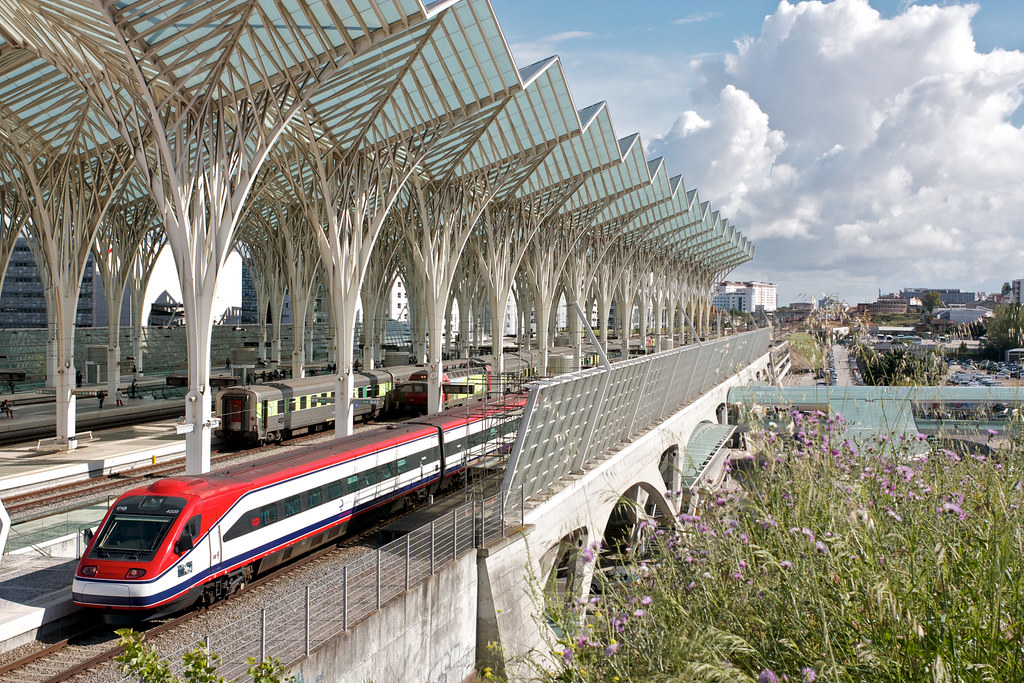


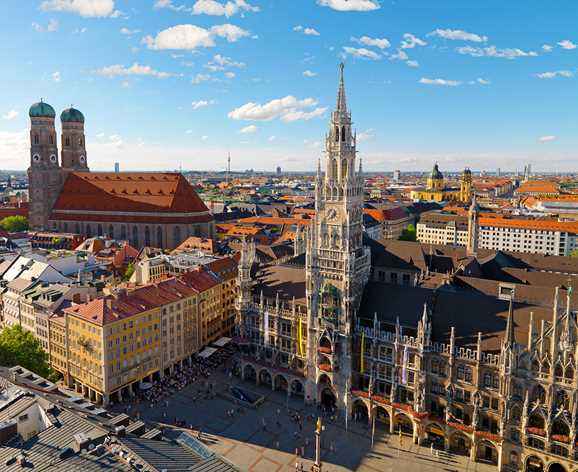
Lisbon to Guimaraes: Trains, Buses, Fares, Today's Connections, Routes, Duration, Types of Trains, Station Guides, Tips, Journey

Portugal Train Tickets

Scan QR code, download App to see Lisbon's more live update, station guide, plan and photos
apple-store google-store

Train schedule Lisbon(Lisboa) to Guimaraes


Popular train routes departing from Lisbon(Lisboa)


Popular train routes arriving in Lisbon(Lisboa)


Popular train routes departing from Guimaraes


Popular train routes arriving in Guimaraes


Departure

Lisbon (; Portuguese: Lisboa [liʒˈboɐ] ) is the capital and the largest city of Portugal, with an estimated population of 505,526 within its administrative limits in an area of 100.05 km2. Lisbon's urban area extends beyond the city's administrative limits with a population of around 2.8 million people, being the 11th-most populous urban area in the European Union. About 3 million people live in the Lisbon metropolitan area, including the Portuguese Riviera (which represents approximately 27% of the country's population). It is mainland Europe's westernmost capital city and the only one along the Atlantic coast. Lisbon lies in the western Iberian Peninsula on the Atlantic Ocean and the River Tagus. The westernmost portions of its metro area form the westernmost point of Continental Europe, which is known as Cabo da Roca, located in the Sintra Mountains. Lisbon is recognised as an alpha-level global city because of its importance in finance, commerce, media, entertainment, arts, international trade, education and tourism. Lisbon is one of two Portuguese cities (alongside Porto) to be recognised as a global city. It is one of the major economic centres on the continent, with a growing financial sector and one of the largest container ports on Europe's Atlantic coast. Additionally, Humberto Delgado Airport served 29 million passengers in 2018, being the busiest airport in Portugal, the 3rd busiest in the Iberian Peninsula and the 20th busiest in Europe. The motorway network and the high-speed rail system of Alfa Pendular links the main cities of Portugal (such as Braga, Porto and Coimbra) to Lisbon. The city is the 9th-most-visited city in Southern Europe, after Rome, Istanbul, Barcelona, Milan, Venice, Madrid, Florence and Athens, with 3,320,300 tourists in 2017. The Lisbon region has a higher GDP PPP per capita than any other region in Portugal. Its GDP amounts to US$96.3 billion and thus $32,434 per capita. The city occupies the 40th place of highest gross earnings in the world. Most of the headquarters of multinational corporations in Portugal are located in the Lisbon area. It is also the political centre of the country, as its seat of government and residence of the head of state. Lisbon is one of the oldest cities in the world, and the second-oldest European capital city (after Athens), predating other modern European capitals by centuries. Julius Caesar made it a municipium called Felicitas Julia, adding to the name Olissipo. Ruled by a series of Germanic tribes from the 5th century, it was captured by the Moors in the 8th century. In 1147, the Crusaders under Afonso Henriques reconquered the city and since then it has been the political, economic and cultural center of Portugal.

Lisbon - Guide, Attractions, Tours, Sightseeings | Train from/to Lisbon | Popular Routes

Guimarães (Portuguese pronunciation: [ɡimɐˈɾɐ̃jʃ] ) is a city and municipality located in the Braga district of northern Portugal, . Its historic town centre is listed as UNESCO World Heritage Site since 2001, in recognition for being an "exceptionally well-preserved and authentic example of the evolution of a medieval settlement into a modern town" in Europe. Guimarães is also a part of the Ave Subregion (one of the most industrialised subregions in the country), as well as the historical Minho Province. The city has a population of 52,181 inhabitants. The population of the municipality in 2011 was 158,124, in an area of 240.95 square kilometres (93.03 sq mi). The current Mayor is Domingos Bragança, of the Socialist Party. The municipality is bordered to the north by the municipality of Póvoa de Lanhoso, to the east by Fafe, to the south by Felgueiras, Vizela and Santo Tirso, to the west by Vila Nova de Famalicão and the northwest by Braga. The city was settled in the 9th century, at which time it was called Vimaranes. This denomination might have had its origin in the warrior Vímara Peres, who chose this area as the main government seat for the County of Portugal, which he conquered for the Kingdom of Galicia. Guimarães has a significant historical importance due to the role it played in the foundation of Portugal. The city is often referred to as the "birthplace of the Portuguese nationality" or "the cradle city" (Cidade Berço in Portuguese) because it is widely believed that Portugal's first King, Afonso Henriques, was born there, and also due to the fact that the Battle of São Mamede - which is considered the seminal event for the foundation of the Kingdom of Portugal - was fought in the vicinity of the city.For some decades, Guimarães was the capital of the County of Portugal. However, shortly after the Battle of São Mamede (1128), and due to the needs of the Reconquista, Coimbra became the kingdom's capital.The inhabitants of Guimarães are often called "Vimaranenses" and "Conquistadores" (the Conquerors) in relation with the historical heritage of the conquest initiated in Guimarães. Guimarães, along with Maribor, Slovenia, was the European Capital of Culture in 2012.

Guimaraes - Guide, Attractions, Tours, Sightseeings | Train from/to Guimaraes | Popular Routes
Destination

Portugal Train Tickets

Scan QR code, download App to see Lisbon's more live update, station guide, plan and photos
apple-store google-store

Hot Journeys


Main Railway Operators


Ultimate Guide to Flixbus

Flixbus

Ultimate Guide To FlixBus/FlixTrain

Friends who live in Europe know that buses are currently one of the cheapest ways to travel in Europe. Flixbus is currently the largest long-distance bus company in Europe.

At present, Flixbus not only does business in popular tourist cities, but most of the large residential towns in Europe have bus stations, including Germany, France, Italy, Netherlands, Poland, Czech Republic, Denmark, Sweden, Norway, Switzerland, Spain , Portugal, Hungary, Austria, Croatia, Belarus and other countries. Among them, the German route is the cheapest. Flixbus began to expand to the United States in 2018, and currently has thousands of sites in the United States. ...